Is It Time for Your Business to Move to ERP Software?
Every stage of business growth brings new opportunities to improve operations. Choosing the right technology helps simplify processes, increase efficiency, and support long-term success. The process that might be functioning using spreadsheets or other software can become the source of inefficiency, delay, and even errors that cost the company money. If your staff spends too much time on maintaining these tools rather than focusing on developing the business further, you may need to implement ERP Software.
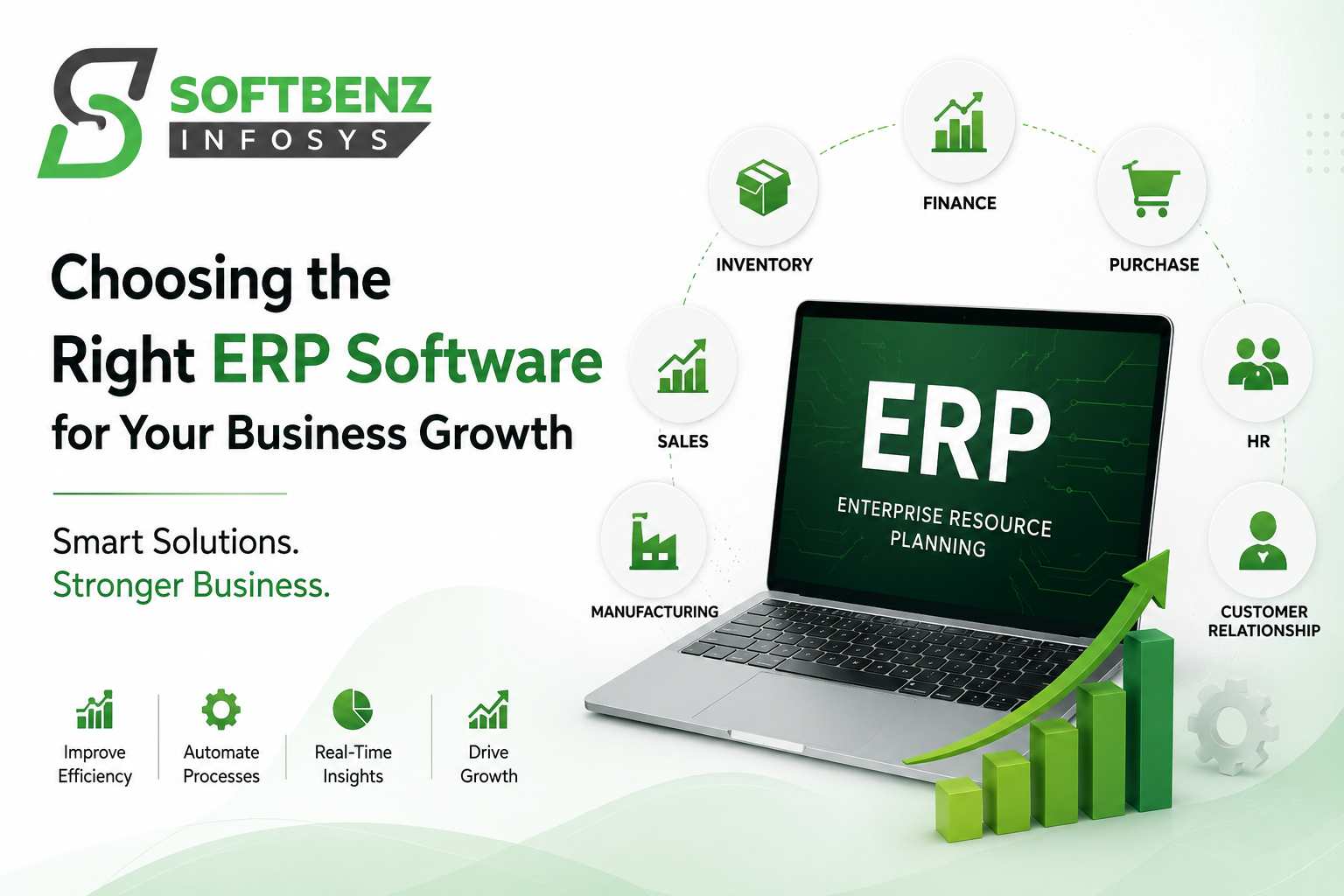
ERP Software (Enterprise Resource Planning Software) allows integration of all the primary business functions into one system, such as finance, inventory, sales, purchases, manufacturing, HR, and customer relations.
This blog will help you to understand what ERP Software is, when you should implement it in your business, what criteria you need to look for when selecting an ERP Software, and what things to avoid.
How does ERP software really work?
ERP Software serves as the hub of all your business activities. The reason why many organizations have different software solutions for various departments is that it may result in different storage of information. ERP Software helps solve this issue by integrating all business processes into a single, unified database. Here is how ERP Software helps:
- Combines all business data: Information from the modules of finance, inventory, sales, purchasing, and human resources is kept in one secure location.
- Automates business processes: Processes like invoice generation, inventory updates, payroll process, and the generation of purchase orders become automatic.
- Access to dashboards in real time: Access to dashboards and reports is available in real time for managers.
- Promotes business collaboration: Since all departments operate within one database, communication is more efficient.
- Integration with other business software: The modern ERP Software integrates with CRM, e-commerce websites, payment gateways, and other software.
Why should you implement an ERP Solution?

ERP Software Implementation is not just about replacing old software with new. Rather, it is the way of becoming a smarter and more efficient company. All the key processes are combined in one unified system, which means better communication, less paperwork, and improved productivity. Having access to up-to-date information enables businesses to make faster decisions and develop their business.
- Efficient Business Processes: The ERP Software merges several business processes in one and, therefore, reduces unnecessary actions and improves the efficiency of the process.
- Improved Decision-Making Process: The ability to get live reports and analytics enables owners to monitor their sales, costs, inventory, and overall performance, which makes the decision-making process much faster and more informed.
- Increased Productivity: Automation helps get rid of routine actions so that employees can focus on more productive activities.
- Improved Customer Service: With accurate inventory, fast order processing and better cooperation between departments, customers will get their services faster.
- ERP Helps Your Business to Grow: Opening new stores, recruiting additional personnel, and adding more products to your product line – whatever steps your company takes in its growth process, ERP will evolve along with your company.
Signs You Should Pay Attention To: Your Business Should Be Moving to ERP Solutions
When your company evolves, its current solutions become insufficient to keep up with the changing processes. Identifying these signs early helps to save your time and effort. If you notice any of the following, it may be the right time to switch to ERP Software. Here are the signs to look for:
1. You Use Several Software Applications
If accounting, inventories, sales, and HR use separate software applications that cannot interact, chances are high that your team spends a lot of time on manual data transfer. ERP Software unifies all these processes.
2. Data is Not Consistent
Information taken from different databases usually leads to inconsistencies. ERP Software centralizes all business data, ensuring every department has access to accurate and up-to-date information. This helps improve collaboration and supports better decisions
3. Reporting is Slow
Decision-making takes too long since it requires gathering data manually from different departments to prepare weekly or monthly reports. ERP Software provides real-time reporting, giving businesses instant access to accurate information for faster and better decision-making.
4. Manual Operations are Increasing
Operations such as creating invoices manually, using spreadsheets in inventory management, and entering data twice, among others, reduce productivity and increase the possibility of human error. ERP Software makes this process easy by automating these operations.
5. Expanding Your Business is Becoming Harder
It is becoming harder as your business continues to grow since the management of large inventory, numerous employees, many customers and other offices is becoming difficult. ERP Software provides scalability for growth of businesses.
6. Poor Customer Service
Disconnection between systems can cause delays in order processing, inventory issues, and poor communication with the customers. ERP software allows workers to instantly access information about customers, thus facilitating their work and providing better customer service.
7. Lack of Real-Time Information About Your Business
By using outdated reports instead of live business data when you make your decision, you do not use your full capacity. ERP Software provides live business information.
Tips for Selecting the Right ERP Software

The selection of the right ERP software is as important as the decision to go for ERP. Choosing an ERP Software solution that matches your business requirements and goals can increase your return on investment (ROI). The following tips can help you select the right ERP software for your business.
Know Your Business Requirements
It is essential to know your major problems and determine which departments need ERP Software. Knowing your business requirements and goals can help you select the right ERP Software solution for your business.
Industry Specific Features
All industries are not similar. You should select the ERP Software tailored to your industry. For example
- The manufacturing industry requires production planning features.
- The retail industry needs inventory management features.
- The service industry needs project management features.
Plan for Scalability
The chosen ERP Software should be able to accommodate future business expansion without requiring major changes or replacement. A scalable solution is one that can support an increased number of users, transactions, and business processes due to company growth.
Consider Integration
The ERP Software should integrate seamlessly with your existing CRM, eCommerce, payroll, accounting, and other business applications. This ensures smooth data sharing and improves overall business efficiency.
Focus on User Experience
Choose ERP Software with a user-friendly interface that is easy to navigate. An easy-to-use system reduces training time, encourages faster employee adoption, and helps teams work more efficiently.
Select a Reliable Vendor
The vendor support plays an essential role in making you successful. Consider an ERP vendor who offers:
- ERP implementation services
- Training to employees
- Technical support
- Upgrades to software
Common mistakes to avoid while choosing the right ERP software
Many ERP projects fail because businesses rush the selection process.The selection of the ERP software requires careful planning, thorough evaluation, and a clear understanding of your business needs. To ensure a successful implementation, avoid these common mistakes when selecting an ERP solution:
- Choosing Based Only on Price: The most affordable ERP Software may not include all the features your business needs. Value is determined through the long term view, and not by initial costs.
- Failure to Consult Employees: The employees will work with the ERP software daily. Consulting relevant parties during the selection process will ease the adoption process.
- Failing to Consider the Impact of Data Migration: Migrating data into a new ERP software with inaccurate or duplicate data can cause problems for many years to come.
- Underestimating Data Migration: Data migration into a new ERP system with inaccurate or duplicated data may cause problems for many years. Make sure to clean and validate your data before implementation.
- Neglecting Employee Training: It is crucial to get employee training in order for an organization to benefit from the best ERP Software.
- Overlooking Scalability Needs: Sometimes organizations prefer ERP solutions which fit their needs at the present moment but do not allow them to grow in the future. Always take into consideration future scalability of ERP Software when you make a choice.
Conclusion
ERP Software is needed if your company faces delays in reporting, manual processing of information, data inconsistency, or scaling difficulties. We at Softbenz Infosys offer customized ERP Software Services that will help in meeting your business objectives. Our team will offer consultation, implementation, training, and support to ensure a smooth transition for you. Do you want to maximize your business process? Then contact us here at Softbenz Infosys and discover the great things that can be done through our ERP Software! For more information about software, do check out some other blogs.
Also Read:
The Power of Digital Marketing and Software Integration
Custom Software vs Off-the-Shelf: Best Choice for Nepali Businesses Futures
Why Every Business Needs A Website?
FAQ Regarding ERP Software
1. What is ERP Software?
ERP Software (Enterprise Resource Planning Software) refers to a single integrated software that helps with financials, inventories, sales, purchases, Human Resources, and other business functions.
2. Who needs ERP Software?
ERP Software is recommended for small, medium, and big businesses dealing with difficult business environments, growing and multi-software system issues.
3. What are the greatest advantages of ERP Software?
Here are the greatest advantages of ERP Software:
- Efficiency
- Automation
- Real-time reports
- Collaboration
- Data accuracy
- Scalability
4. How long is the ERP Software Implementation?
Time needed for ERP Software Implementation depends on business size and complexity. The duration will vary from a few months in case of smaller organizations to several months in the case of larger organizations.
5. How will I know that my company needs ERP Software?
In case there are different systems, manual activities, inconsistent reports, duplicate data entry, and problems in scaling your organization, then you may have to think of ERP Software.